Startup views Salzburg as the ultimate testing-ground
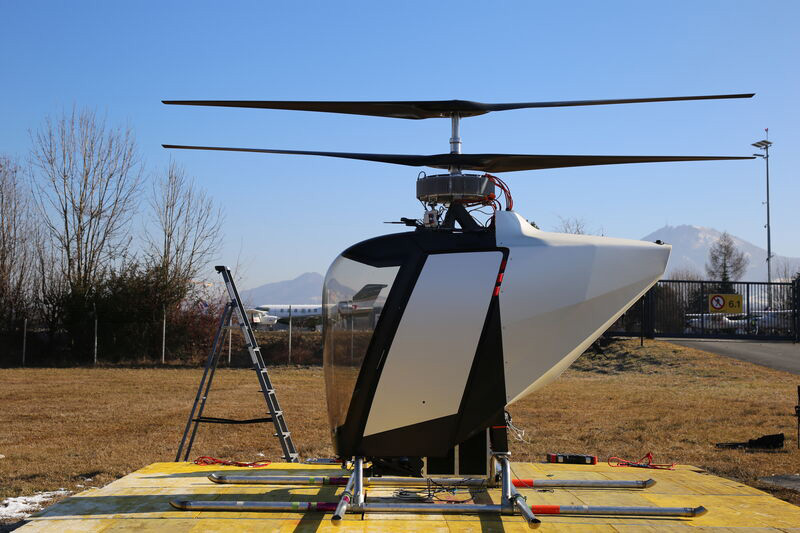
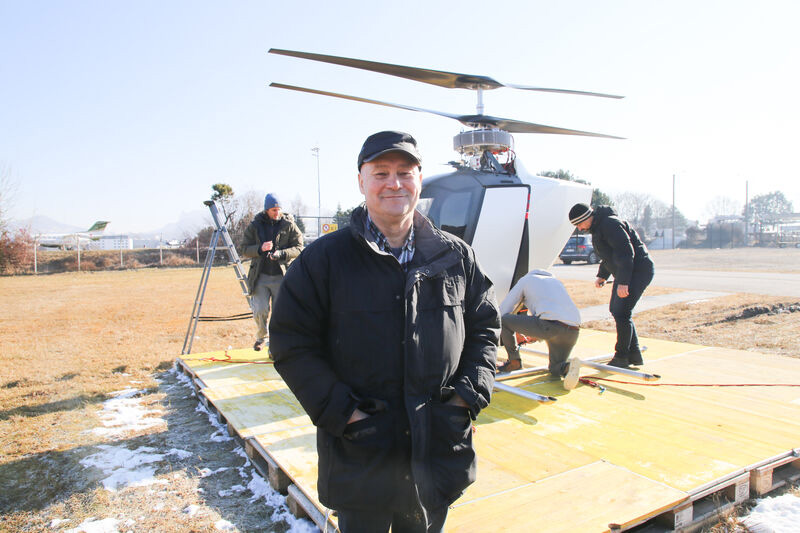
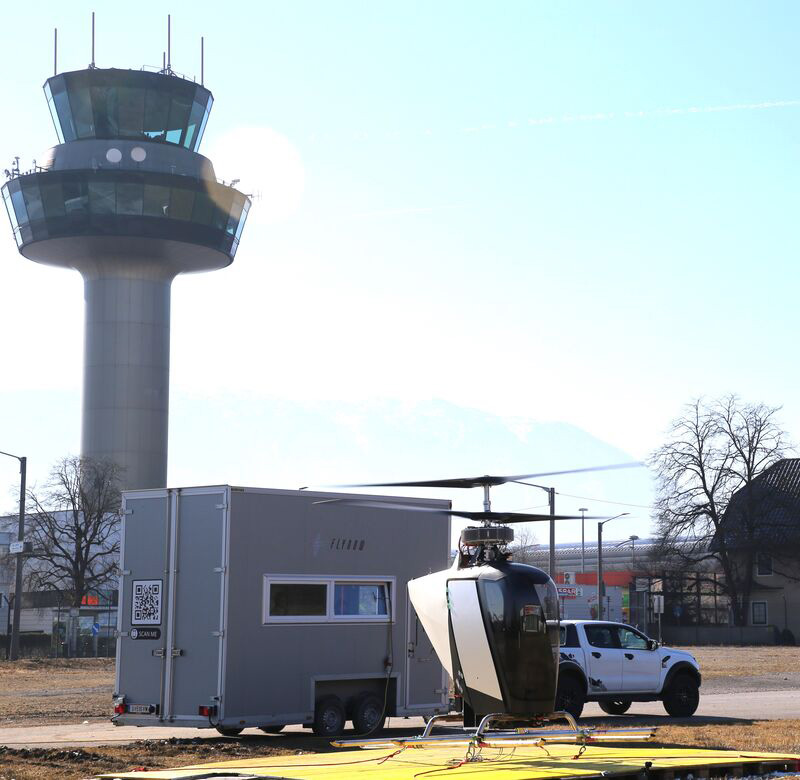
FlyNow, a Salzburg-based start-up, is considered a leading company in the field of air mobility and relies on a modular concept that enables eCopters to be used for passenger and cargo flights. This technology is currently being tested at Salzburg Airport.
The focus of the company is on developing a modular eVTOL (electric Vertical Take-off and Landing Vehicle) family for cargo and passenger flights. The tests at Salzburg Airport are intended to further optimize efficiency and ensure an environmentally friendly and user-focused future for urban mobility.
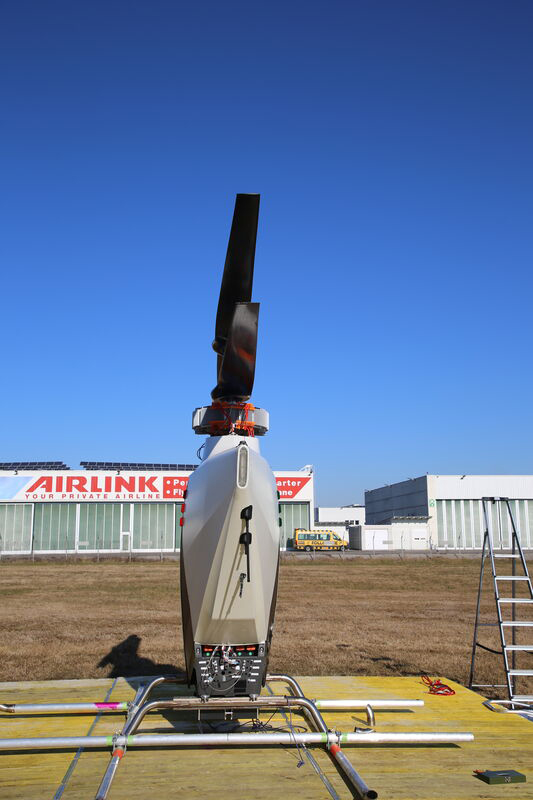
The eCopters consist of just a few core elements: rotors, a cabin, batteries, and an electric motor. Due to their low weight, smaller batteries and less material are required than many competitors. The modular concept allows eCopters to be used for passenger or goods transport with only a few modifications. The design includes a one-seater and a two-seater passenger version. FlyNow also refers to its eCopters as Personal Air Vehicles (PAV) because these aircrafts are intended to contribute to inner-city mobility at affordable prices for everyone.
The emission-free eCopters can fly for around half an hour at a maximum speed of 130 km/h. The aircrafts are lightweight and require only about one-eighth of the resources needed to manufacture an average car. In addition, they generate a noise level of around 55 decibels on the ground, which means that they are practically imperceptible in urban areas, where average noise emissions are measured at 60 to 65 decibels.
FlyNow CEO Jürgen Greil sees commercial application potential for the cargo version in addition to inner-city transport. The wide range of possible applications extends from the transport of medical and relief supplies to fighting forest fires, supplying spare parts and food, and supporting rescue organizations. As long as the range is less than 50 km and the payload is less than 200 kg, many applications are conceivable. In this way, oil rigs, hotels, small islands, or alpine club huts, for example, can be supplied. In principle, use is envisaged wherever there is little ground transportation infrastructure and in areas that are topographically challenging but interesting for economic or tourist reasons.