Renovation Phase 1
Implementation of initial measures for the remediation of the legacy PFAS contamination (Phase 1)
Phase 1 – Hydraulic containment as an immediate measure
To reduce the further spread of PFAS contaminants in the outflowing groundwater, a hydraulic containment system incorporating a groundwater treatment plant was established as an immediate measure in the second half of 2023.
The hydraulic containment process involves pumping water from wells located within the designated contaminated site, subsequently treating it in the groundwater treatment plant, and reintroducing the cleaned groundwater into the subsurface.
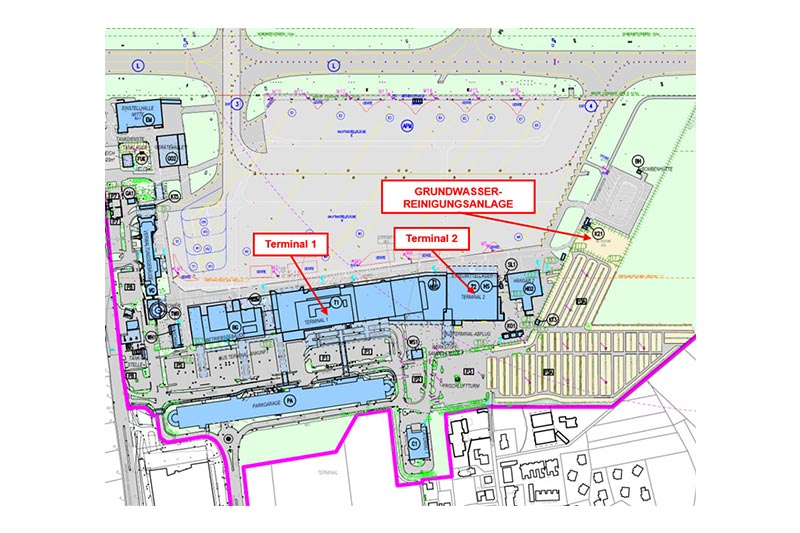
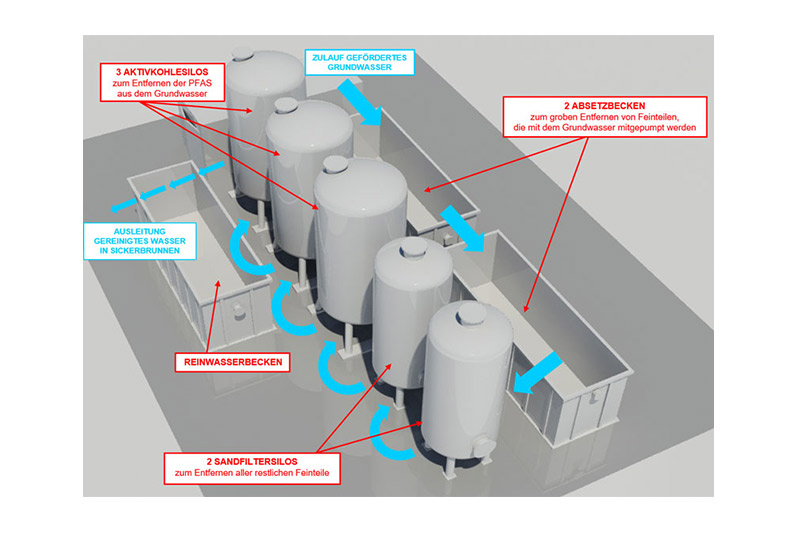
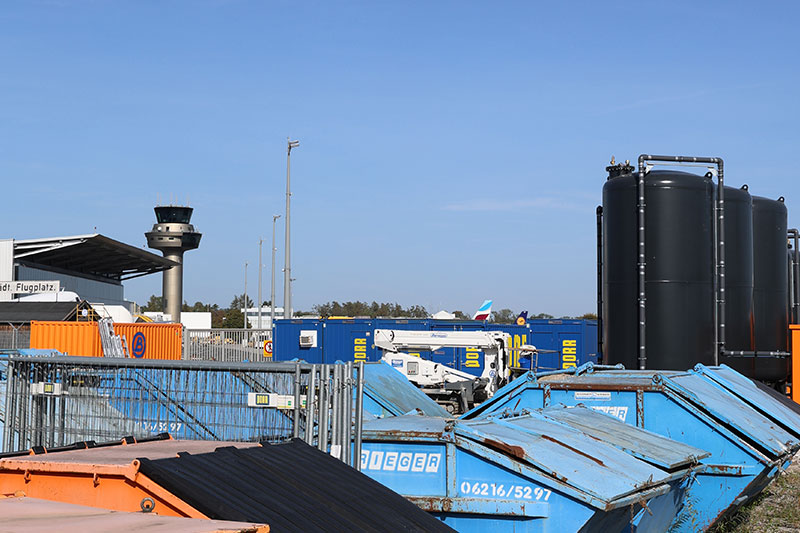
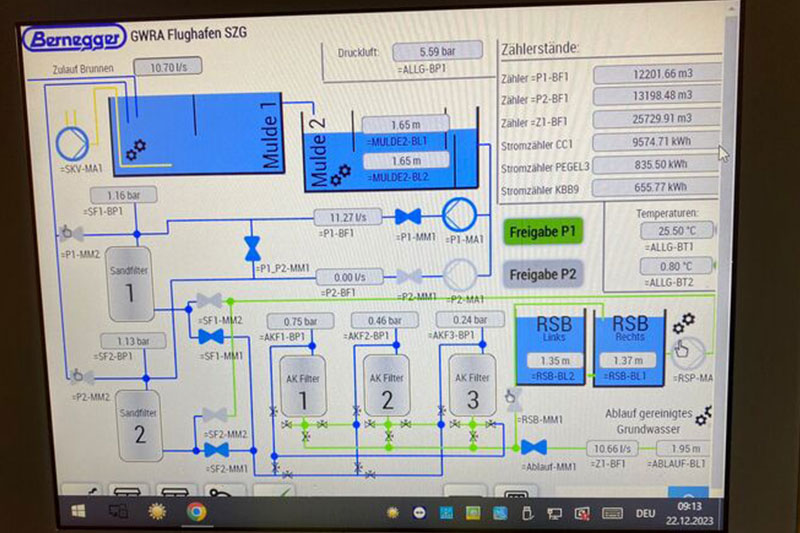
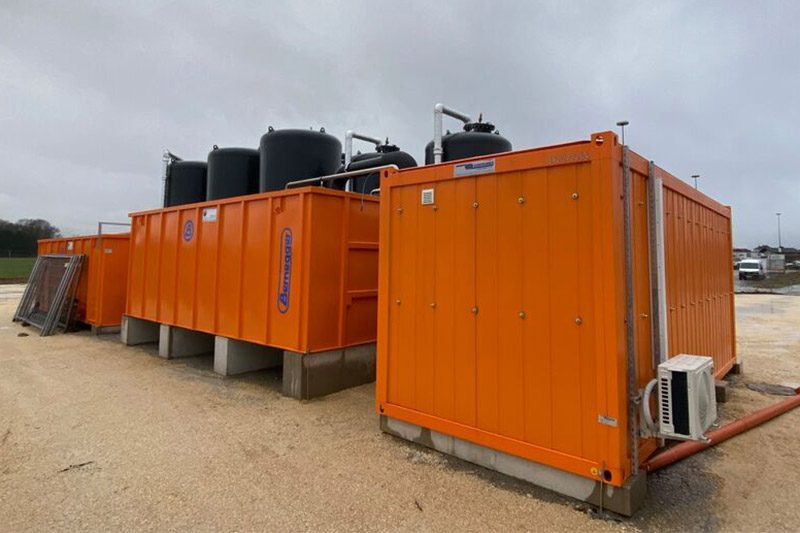
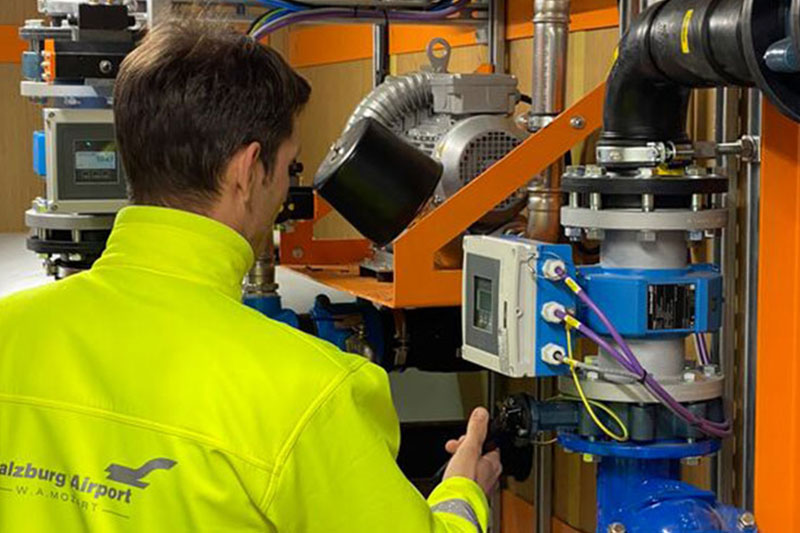
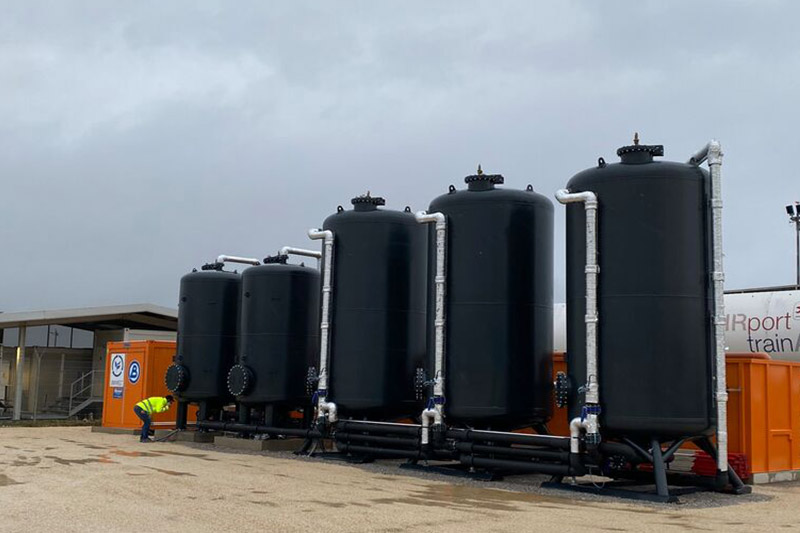
Pumping is currently carried out via seven extraction wells. The groundwater is then routed to the treatment plant—which utilizes iron, manganese, and activated carbon filters—before being reinfiltrated into the ground via an infiltration system. The plant has a pumping capacity of up to 25 liters per second. The groundwater treatment plant and the connected wells are controlled by equipment housed in a control container. The control technology container occupies an area of approximately 8.5 x 30 meters, while the groundwater treatment plant consists of a total of five filter towers, each 10 meters high. These facilities are located in the southern, airside area of the airport.
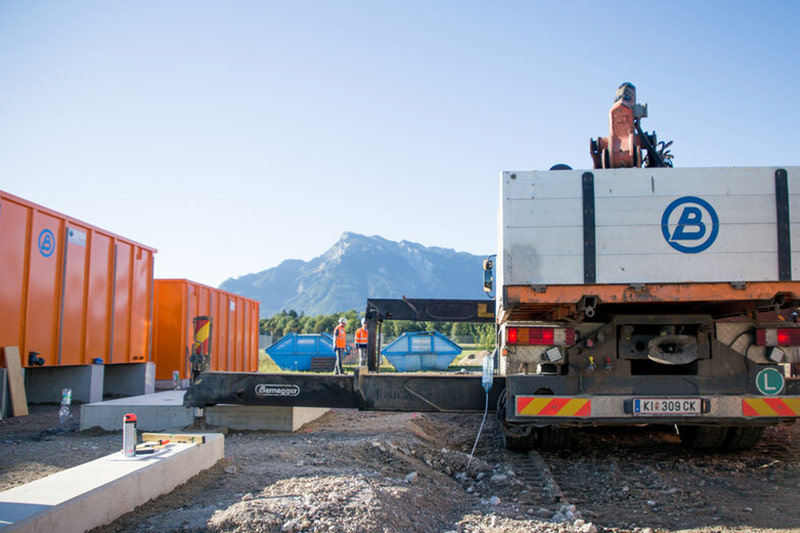
Following the installation of the control technology containers and sedimentation basins in September 2023, as well as the delivery and filling of sand filters and activated carbon vessels, the plant commenced operations on January 1, 2024, and has been running around the clock ever since.
During the first year of operation, it became apparent that—due to the proximity of the infiltration wells to buildings and exacerbated by very high groundwater levels in 2024—operating at full pumping capacity resulted in water ingress into the basement areas of Terminal 2 and the energy center. The infiltration system was subsequently retrofitted with additional monitoring equipment to ensure that groundwater extraction is regulated based on the maximum backwater level within the infiltration structure. The now-variable pumping rate ensures that such water ingress no longer occurs.
Regulatory authorities mandated extensive monitoring of the groundwater body and the treatment plant. Water samples are regularly collected from various monitoring points—located both within the airport grounds and further downstream to the northeast—and analyzed for PFAS concentrations. These monitoring points include dedicated groundwater wells and piezometers, as well as private residential wells (utilized for analysis with the owners' consent).
PFAS concentrations are also regularly measured at all key system components: sedimentation basins, sand filters, activated carbon filters, and treated water basins.
The regulatory limit for the infiltration of treated groundwater—set at a total PFAS-20 concentration of 0.075 µg/L—is stricter than the statutory limit for drinking water; since the plant began operations, levels have consistently remained well below this threshold.
The activated carbon filters undergo continuous maintenance and are replaced and regenerated as needed. To date, two of the three activated carbon filters have been successfully replaced and regenerated. Furthermore, since commissioning, ongoing minor technical adjustments have been made to optimize operations, such as improvements to backwashing systems, monitoring equipment, and maintenance procedures.
Several years of operation have confirmed the groundwater treatment plant's excellent purification performance, with PFAS levels in the treated groundwater consistently remaining well below the mandated limits.
Throughout the operational period, the PFAS expert team has also gained valuable insights for system optimization—covering aspects such as sizing, filter selection, and monitoring equipment, as well as groundwater treatment strategies to address the high iron and manganese levels detected in the water. These findings and data provide a crucial foundation for planning the main remediation measure (Phase 2). All measures are being carried out on an ongoing basis in close coordination with the authorities and the Federal Environment Agency.